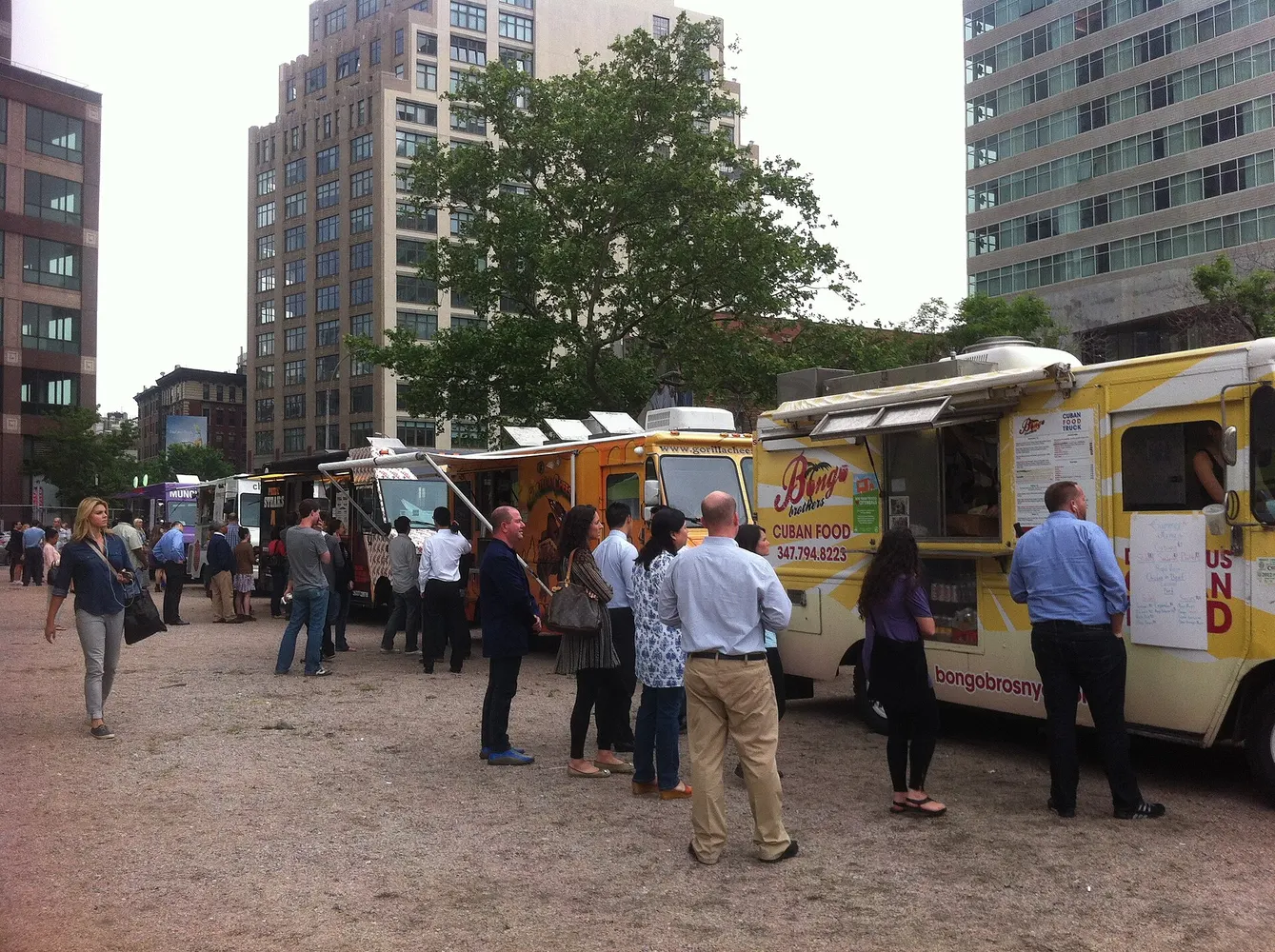
A catering website has one job: turn a vague inquiry into a qualified one before you spend an hour on it. The person asking has a date, a headcount and a budget in their head. The site asks for all three, plus the venue and the service style, before the message reaches you. The reply you write is then a quote, not a list of questions. For a truck, the job is simpler and constant: where are you today, and can I book you.
The menus live on the page as real text, not a PDF attached to an email. Packages priced per person, sample menus for a wedding, an office lunch and a backyard party, dietary and allergen notes, and photos of the actual spread on the actual table. A planner forwards the link to the client, and Google reads every dish, so a search for a specific cuisine and a specific kind of event can land on you.
Then the booking. The calendar shows the dates you already hold as taken, so inquiries land on days you can serve. When a quote is accepted, the site takes the deposit by card and gets the agreement signed, so the event exists and is paid before you order from the supplier. Trucks get a schedule feed with a map and times you update from the cab, plus a sign-up for regulars and a form for the office park or the brewery that wants a private booking. Corporate and production accounts get their own page with recurring orders and invoicing.
Underneath sits the search layer. A Google Business Profile set up as a caterer or food truck with the service area you actually drive, schema so results read you as a real business, reviews pulled onto the page and requested by text after every event, and pages for the kinds of events and the parts of the county you want more of. A landing page for the corporate season and the wedding season, and ads that run in the months people book.