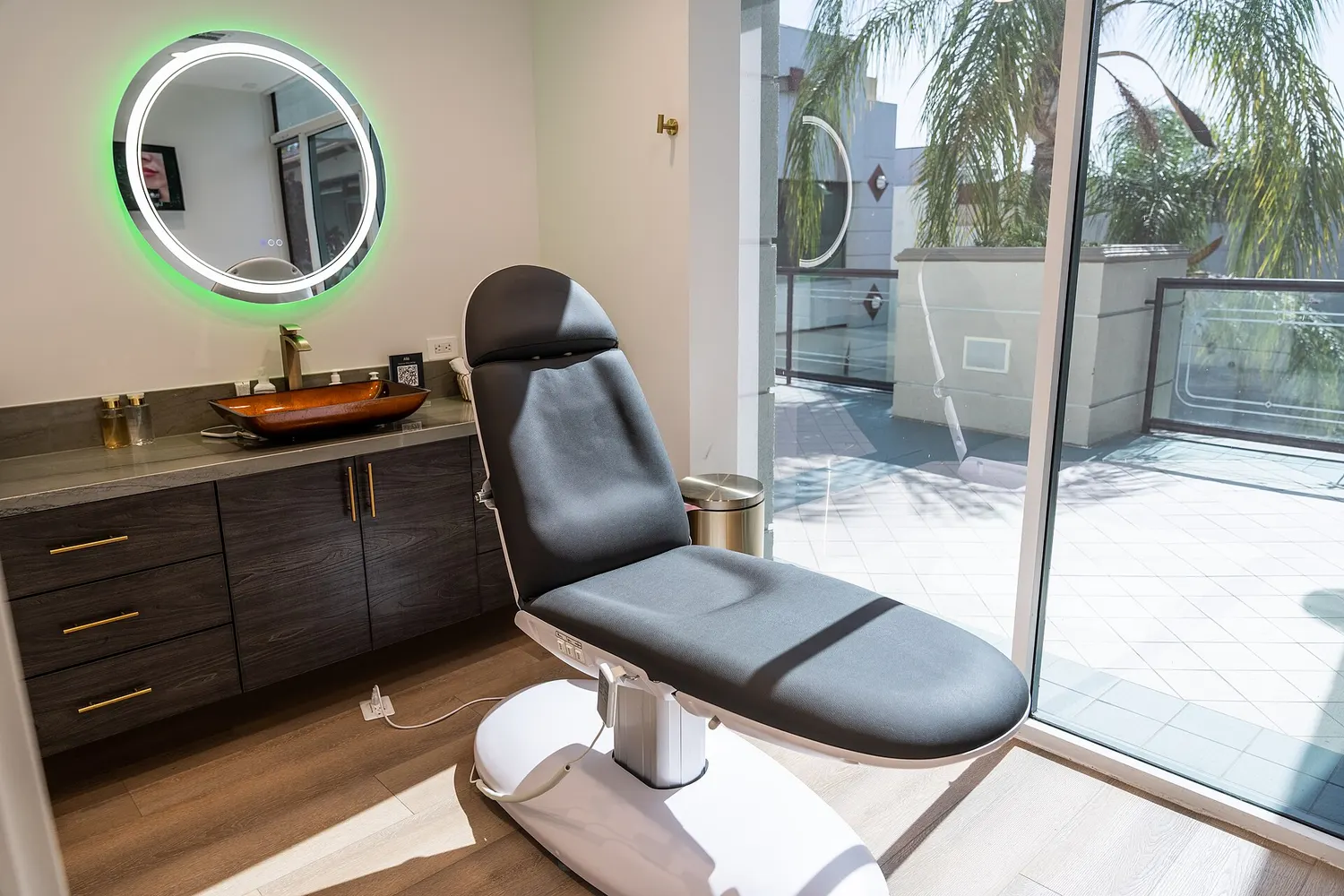
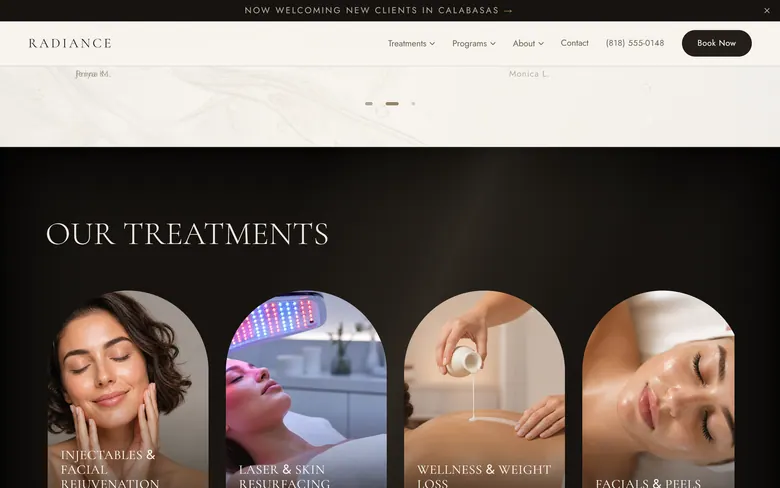
A med spa client arrives from Instagram, a friend’s recommendation or a search for one treatment by name, and she is comparing three clinics on her phone. She wants to know what it costs, who is doing it and when she can come in. The site answers those three in the first screen: a treatment menu with posted starting prices, the injectors by name with their licenses, and a booking button that shows real slots.
Pricing is the argument most med spa sites refuse to have, and it is the one that fills the calendar. Neurotoxin by the unit, filler by the syringe, a laser series by the package, a membership by the month. We post what you are willing to post, explain what changes it, and put a deposit on the booking so the slot is real. Our Radiance concept and our client Replenish both run on a posted menu, and both are the model for the layout.
Then the machinery under the calendar. A card at booking, a reminder by text two days out and again that morning, a waitlist that fills a cancellation, a membership that renews without a phone call, and a review request that goes out when the client leaves happy. The before-and-after gallery is built with consent tracked per photo, because a photo without a release is a liability, not marketing. The medical director, the good faith exam and every injector’s license are stated on the page where a patient looks for them.
The search layer finishes it. A Google Business Profile matched to the site, MedicalBusiness schema, a page for each treatment people search by name, and a city page for each area you draw from. High-ticket treatments get their own landing pages built for paid traffic, so a body contouring campaign lands on a page about body contouring with a price and a form, not on the homepage.