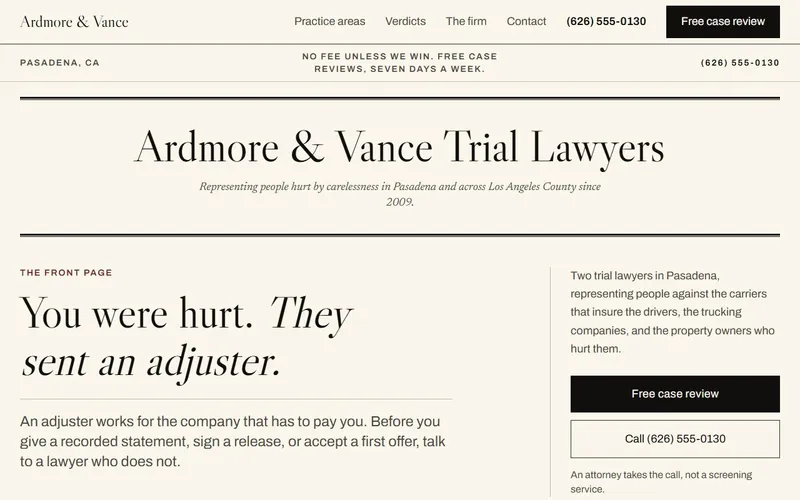
A law firm website is read by people in a bad week. Someone was hit on the freeway, served with papers, picked up by police, or told a parent needs a trust before the surgery. They are reading on a phone and they are deciding whether to call. The site has to answer the question they came with, say who the attorney is, and make the call or the consultation booking one tap.
So the practice areas lead. A firm that handles immigration and family law gets two paths from the first screen, each with its own page, its own questions answered, and its own form. The attorney bio is short and real: where they went to law school, the State Bar number, how long they have practiced, the languages spoken. A headshot taken in daylight beats a stock gavel.
Then intake. The form asks what a paralegal would ask in the first two minutes: what happened, when, whether anyone else is involved, and how to reach them. Submissions text the attorney or the intake person. For firms that do not want to answer the phone during a hearing, the AI receptionist picks up, runs the screening questions, and books the consultation into the calendar. Consultation fees, if you charge them, are stated on the page.
Underneath sits the layer that gets the firm found: a page per practice area and per city the firm appears in, LegalService schema, a Google Business Profile that matches the site, and copy written so the State Bar advertising rules are satisfied and an AI assistant can quote the page when someone asks who handles a DUI in Pasadena.