A chiropractic patient arrives in one of two states. Either something hurts today and they want the soonest appointment within a short drive, or they were in a car accident and someone told them to see a chiropractor. The site serves both without making either read the other. The person in pain sees the next open slot and a phone number. The accident patient sees a page that explains what happens next.
The price question comes right after. Chiropractic is the health profession where patients most often pay cash, so the site says what a visit costs, what the new-patient special includes, which insurance plans you take by name, and how the accident cases work on a lien. A patient who knows the number books. A patient who has to call to ask books with the chain that posted its membership price on a billboard.
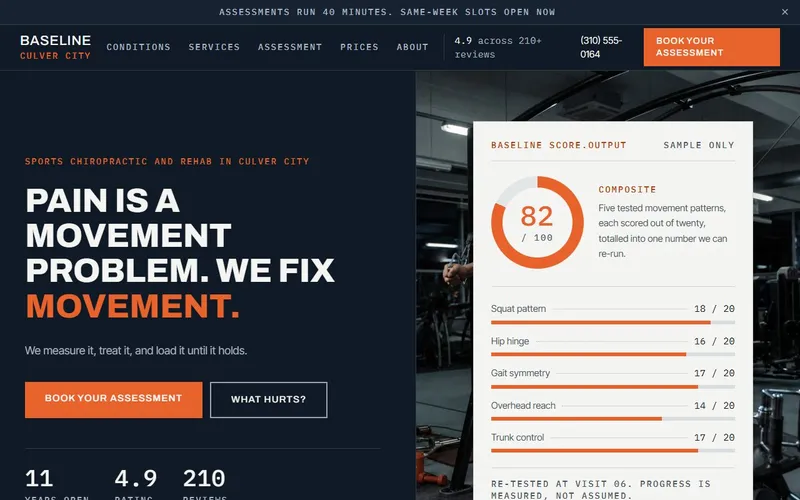
Condition pages carry the search. Sciatica, whiplash, herniated disc, tension headaches, plantar fasciitis, a runner’s knee, each written to the question a patient types and each ending with a booking button. Our Baseline Spine and Sport concept treats them as a report card rather than a brochure, with a scored assessment and a re-test, and that is the standard we build to. Behind the pages, reminders go out by text, rebooking links follow each visit, and the AI receptionist answers while your hands are on a patient.
Then the search layer. A Google Business Profile matched to the site, Chiropractor schema, your Board of Chiropractic Examiners license linked for lookup, reviews requested after every visit and pulled onto the page, and a city page for each area you draw from. The condition pages are written to be the answer when someone asks an assistant what to do about a disc, so the answer ends with your clinic.